Designing a home on the Mid North Coast of NSW comes with unique opportunities and challenges. Warm summers, mild winters, and the lush natural environment make this region one of the most attractive places to live. At the same time, these conditions demand careful attention to how homes are designed, built, and maintained. A Passive House approach ensures year-round comfort, outstanding energy efficiency, and healthier living. For those considering building or renovating, it’s worth exploring why Passive House is particularly relevant here.
What is Passive House?
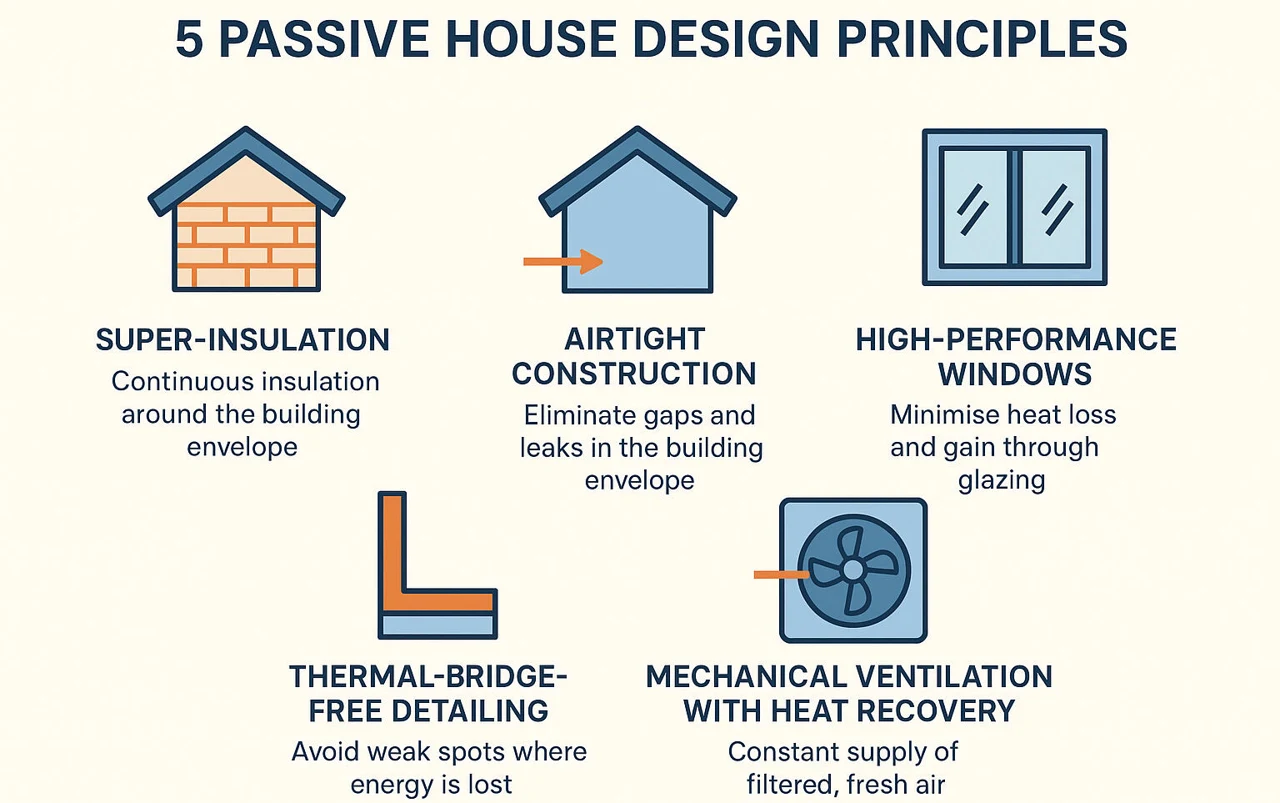
Passive House (or Passivhaus in its German origin) is a globally recognised building standard that focuses on energy efficiency, thermal comfort, and indoor air quality. Unlike conventional construction, Passive House design relies on a combination of airtightness, high-performance glazing, continuous insulation, controlled ventilation, and solar orientation to create a stable indoor environment.
Homes designed to this standard consume significantly less energy for heating and cooling compared to typical builds. The result is not just lower running costs but also a higher standard of comfort and resilience. Importantly, Passive House isn’t about building oversized or extravagant structures—it’s about thoughtful design, premium materials, and attention to detail.
Why is Passive House Relevant to the Mid North Coast?
The Mid North Coast is known for its climate diversity—warm humid summers, cooler inland winters, and weather patterns that shift dramatically between coastal and hinterland areas. Conventional homes here often rely heavily on air-conditioning in summer and supplementary heating in winter, leading to rising energy bills and fluctuating comfort levels.
A Passive House on the Mid North Coast is designed to handle these extremes. High insulation levels mean the home retains warmth on frosty mornings in Dorrigo, while airtight construction and shading strategies keep interiors cool in Coffs Harbour’s summer heat. Ventilation systems maintain fresh air without losing energy, meaning families enjoy year-round comfort with minimal reliance on mechanical heating and cooling.
Temperature Fluctuation
One of the biggest frustrations for local homeowners is how quickly indoor temperatures rise and fall. A lightweight home might heat up in the sun but lose warmth as soon as the evening breeze rolls in. Passive House construction addresses this with superior insulation, thermally broken double-glazed windows, and controlled solar gain.
By maintaining a stable indoor climate, these homes protect occupants from uncomfortable swings. Whether you’re inland or on the coast, your home feels consistently pleasant. This stability also supports better sleep and reduces the stress on heating and cooling systems, extending their lifespan and lowering household costs.
Build Quality Matters
Humidity is a defining feature of the Mid North Coast. Excess moisture can lead to mould, condensation, and poor indoor air quality—issues many homeowners here have struggled with. A Passive House uses mechanical ventilation with heat recovery (MVHR) to provide continuous fresh air while balancing humidity levels.
This creates an environment where moisture is carefully managed, reducing the risk of mould growth and structural damage. For families with allergies or sensitivities, the difference is noticeable: cleaner, drier, and healthier indoor spaces
Healthy Homes
A Passive House is more than energy efficient—it’s a healthy home. Constant hepa filtered fresh air supply, controlled humidity, and stable temperatures combine to support wellbeing. For families, this means reduced risk of asthma triggers, better sleep quality, and an environment that feels naturally comfortable.
As awareness grows around the connection between housing and health, many Mid North Coast residents are seeking homes that do more than just provide shelter. They want spaces that nurture their lifestyle, support their wellbeing, and respect the surrounding environment. A Passive House achieves exactly that.
Conclusion: A Better Way to Build on the Mid North Coast
For those planning to build or renovate, considering a Passive House approach is an investment in comfort, health, and longevity. On the Mid North Coast, where climate, humidity, and lifestyle intersect, this design method provides solutions that conventional building often overlooks.
At Grounded Works Design Studio, our focus is on creating homes that balance premium craftsmanship with sustainable performance. Whether it’s a compact home in Bellingen or a family retreat by the coast, Passive House principles ensure your space is built for the future